Olivia Krüger · 24 October 2026
Digital Time-Barter Systems Reshaping Household Assistance in Metropolitan Outskirts
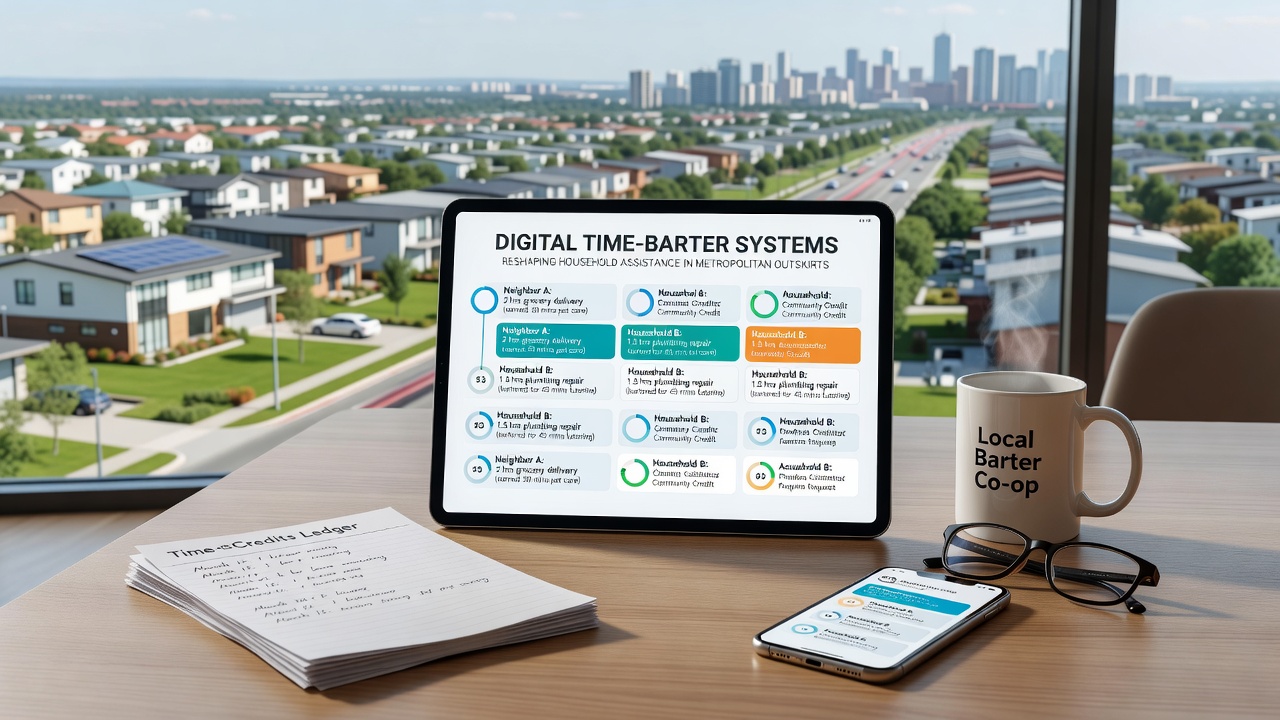
Digital time-barter systems operate through mobile applications and web platforms that allow residents in metropolitan outskirts to exchange hours of assistance for tasks such as lawn care, childcare, minor repairs, and meal preparation without using currency, and these networks have expanded steadily since the mid-2010s as suburban populations grew beyond traditional city boundaries.
Core Mechanics of Time-Barter Platforms
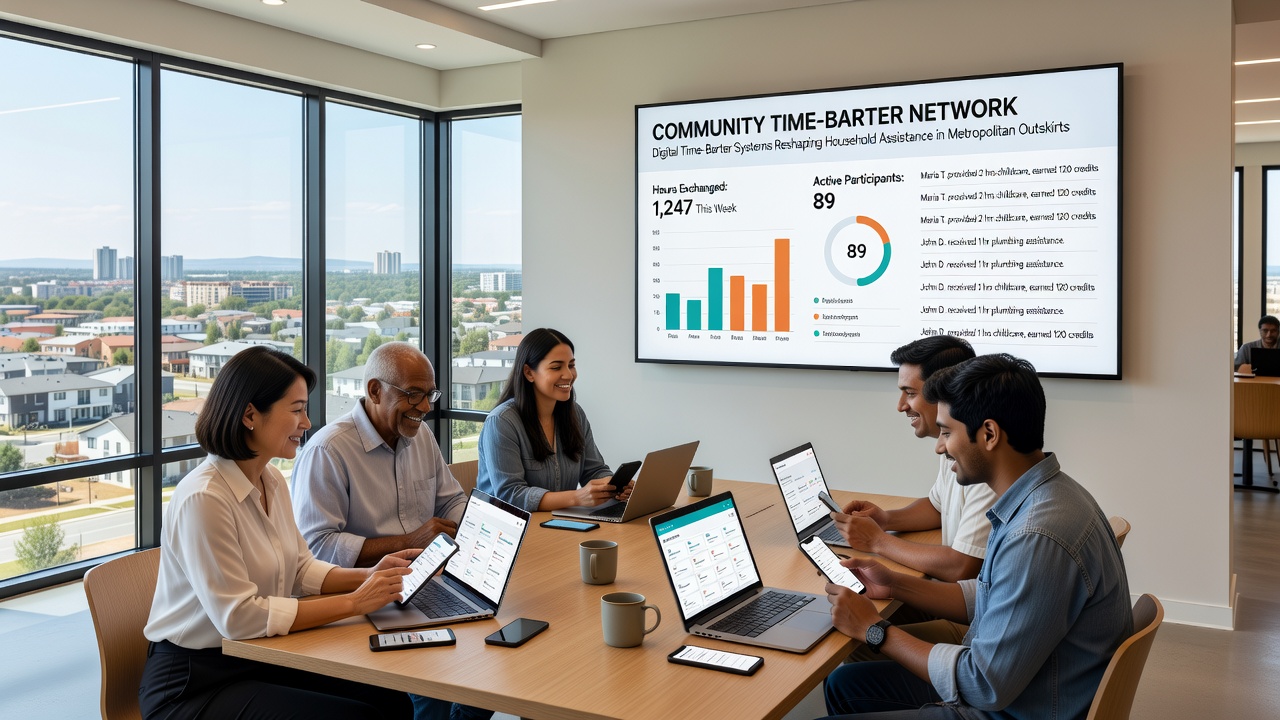
Users register with verified profiles, log hours contributed to another household, and redeem equivalent credits when they need support themselves, while algorithms match participants based on location, availability, and skill sets listed in the system database. Observers note that these platforms often integrate with local community calendars to schedule exchanges during evenings and weekends when demand peaks, and data from multiple deployments shows average session lengths of two to four hours per transaction. Researchers at several institutions have tracked participation rates that rise when platforms include rating systems and dispute resolution features, which encourage repeat interactions among neighbors who might otherwise remain unconnected.
Expansion Patterns Across Outlying Districts
Metropolitan outskirts in North America, Europe, and Australia have seen the fastest uptake because lower population density creates gaps in commercial service availability, and residents turn to time credits to bridge those gaps. In October 2026, Statistics Canada released figures indicating that time-barter registrations in census tracts located 30 to 60 kilometers from major city centers increased by 27 percent over the prior twelve months, whereas urban core registrations grew by only 9 percent during the same interval. Similar patterns appear in reports from the Australian Bureau of Statistics, which documented elevated activity in peri-urban zones around Melbourne and Sydney where commuting times exceed 45 minutes one way.
Household Task Categories Driving Adoption
Common exchanges involve outdoor maintenance such as leaf removal and gutter cleaning during seasonal transitions, indoor support including pet sitting and laundry assistance for families with irregular work schedules, and skill-based help like basic computer setup or language tutoring for school-age children. Platforms record that 42 percent of logged hours in suburban rings fall under childcare and eldercare categories according to aggregated user data released by several network operators, while repair and renovation tasks account for another 31 percent. Those who've studied transaction logs observe that seasonal spikes occur around school holidays and major weather events, when households require temporary relief that commercial providers cannot always supply on short notice.
Integration With Local Infrastructure
Some municipal planning departments have begun incorporating time-barter data into transportation and zoning reviews because high exchange volumes correlate with reduced vehicle trips for service errands, and this information helps refine bus route planning in sprawling districts. European Commission analyses of community economy pilots note that municipalities providing free public Wi-Fi at community centers see higher platform engagement, since many users access matching tools from shared spaces rather than home connections. And coordination with libraries has produced dedicated kiosks where residents without smartphones can browse available tasks and print confirmation receipts for completed exchanges.
Demographic Participation Trends
Data indicates that households with children under twelve and adults over sixty-five participate at rates 1.8 times higher than single-person units in the same zip codes, largely because these groups report recurring needs for flexible, low-cost assistance. University of British Columbia studies on time-banking in Canadian suburbs found that newcomers to a region use the systems more frequently during their first eighteen months of residence, after which established social circles sometimes reduce reliance on digital matching. Figures reveal steady growth among working-age adults who split time between remote employment and local service exchanges, creating a hybrid model that blends digital coordination with in-person delivery.
Conclusion
Digital time-barter systems continue to influence how households in metropolitan outskirts organize daily assistance, with transaction volumes and geographic reach both expanding through 2026. Platform operators report ongoing refinements to matching algorithms and verification protocols that sustain user retention across seasons, while government statistical agencies track correlations between these networks and shifts in local service demand. Observers continue to monitor how these exchanges interact with existing community organizations and commercial providers without displacing either category entirely.