Harper Beck · 10 October 2026
Digital Platforms Enabling Time-Based Exchanges for Home Maintenance Among Suburban Families
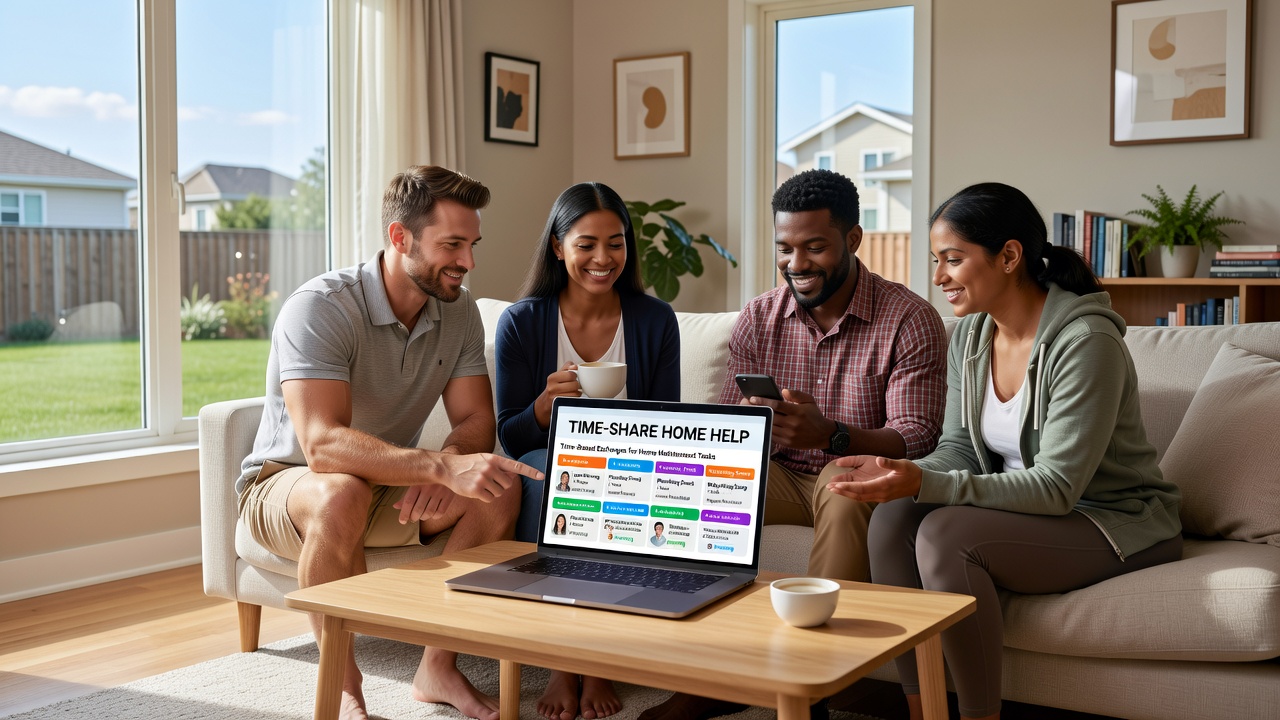
Digital platforms have expanded time-based exchange systems that connect suburban families for home maintenance tasks without monetary transactions, and these networks operate through structured hour-for-hour swaps where participants log time spent on activities like gutter cleaning, fence repair, or seasonal landscaping. Researchers tracking these systems note that users register skills and availability, then match requests with offers so that one household might provide three hours of plumbing assistance in exchange for equivalent time on yard work from another family. Data from multiple regions shows steady growth in such arrangements since the early 2020s, with suburban areas reporting higher participation rates than dense urban cores because single-family homes generate more frequent maintenance needs.
Core Mechanics of Time-Based Home Maintenance Exchanges
Time-based platforms function by converting labor into credits that participants earn and spend within closed community loops, and families accumulate credits by completing tasks for others while redeeming them for help on their own properties. Observers note that verification features require users to confirm completed work through photo uploads or neighbor endorsements, which maintains accountability across exchanges. Studies conducted by academic institutions indicate that these systems reduce duplication of equipment purchases, since neighbors coordinate shared access to tools like pressure washers or ladders rather than each household acquiring duplicates. In practice, a family needing deck staining might post a request for four hours, receive responses from nearby participants, and later fulfill an equal amount of time on electrical troubleshooting for another household.
Platform Features Supporting Suburban Coordination
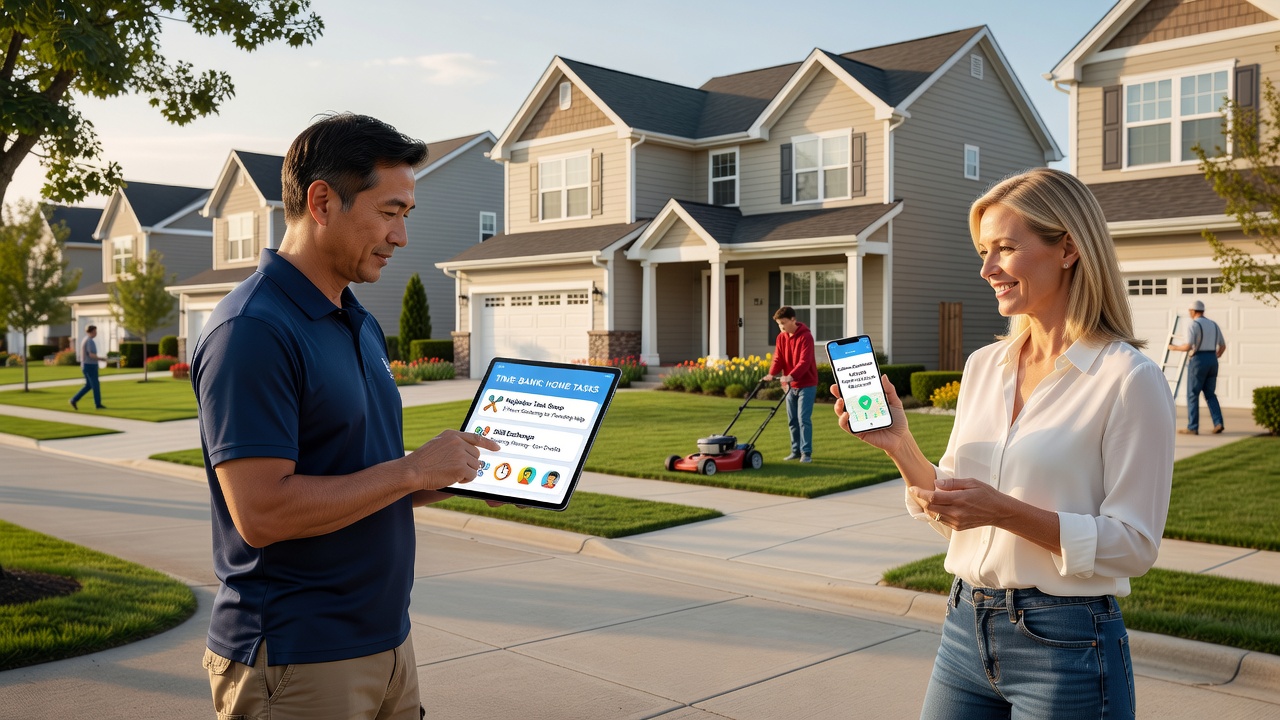
Most platforms incorporate mapping tools that display available helpers within a defined radius, allowing families to prioritize exchanges with those in the same subdivision or adjacent blocks. Scheduling modules sync with household calendars so that tasks align with weekends or after-school hours when multiple adults are free. Notification systems alert users to nearby requests, and rating mechanisms track reliability across repeated interactions. Research from European collaborative economy reports highlights how integration with local weather data helps schedule outdoor tasks like leaf removal or snow clearing during optimal windows. As of October 2026, several platforms added AI-assisted matching that factors in skill overlap, physical demands, and prior exchange history to improve completion rates.
Participation Patterns Among Suburban Households
Figures from national statistical agencies reveal that suburban families with children participate more frequently in time exchanges for maintenance tasks, often citing the need for flexible support during school breaks or sports seasons. Canadian data compiled by Statistics Canada shows rising involvement in time-banking networks among households in metropolitan outskirts, where longer commutes leave less time for routine upkeep. Platforms report that tasks cluster around seasonal peaks, such as spring gutter clearing or fall leaf collection, and users complete an average of six to eight exchanges per year once enrolled. One documented case involved a network in a Midwestern subdivision where 120 families exchanged over 1,800 hours of maintenance labor during a single calendar year, focusing on painting, minor carpentry, and appliance installation.
Geographic and Demographic Trends Observed in 2026
Reports compiled in October 2026 indicate continued expansion of these platforms across North American and Australian suburban corridors, with new user registrations increasing by double-digit percentages in several tracked markets. Academic analyses from university research centers find that households earning middle incomes adopt time exchanges at higher rates than higher-income groups, partly because they balance professional demands with property upkeep responsibilities. European Union statistics on collaborative consumption document parallel growth in peri-urban zones, where families exchange skills such as tiling, window sealing, and garden bed preparation. Observers tracking these networks note that retired residents often serve as consistent contributors, offering accumulated expertise in return for assistance with heavier lifting tasks.
Integration With Local Infrastructure and Regulations
Some municipalities have begun recognizing time-exchange platforms within community development plans, providing meeting spaces or digital infrastructure support for resident coordination. Local ordinances in certain jurisdictions address liability questions by clarifying that exchanges remain non-commercial and fall outside standard contractor licensing requirements. Research papers published through institutions like the OECD outline how these arrangements complement existing neighborhood watch programs by increasing daytime activity around properties. Platforms themselves incorporate disclaimers and insurance guidance to address potential property damage during exchanges, directing users toward supplemental coverage options when needed.
Conclusion
Time-based digital platforms continue to organize home maintenance exchanges among suburban families by matching skills, tracking hours, and facilitating local coordination without financial transfers. Available data from government agencies and research bodies documents measurable activity levels, seasonal patterns, and demographic participation across multiple regions. These systems rely on verification tools, mapping functions, and scheduling features to sustain ongoing exchanges while operating within existing regulatory frameworks.